

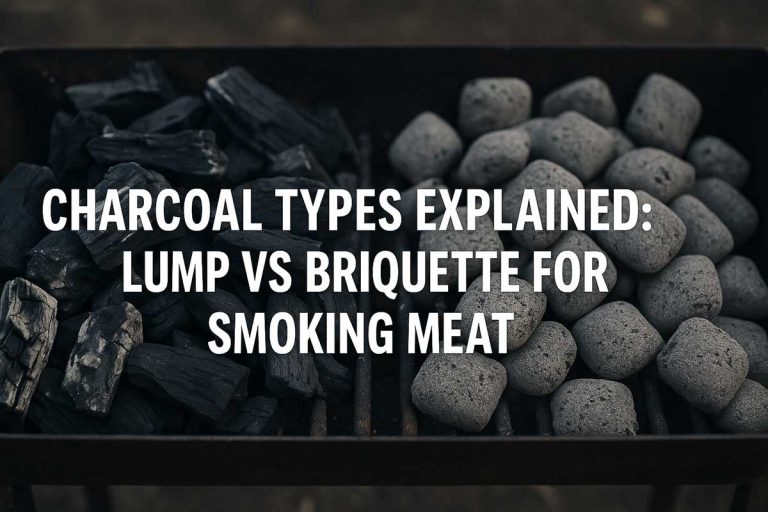
When it comes to smoking meat, the charcoal you use can change everything. From how your meat tastes to how long your fire holds steady, the type of charcoal plays a huge role in the results you get. Most backyard smokers stick to two main options: lump charcoal and charcoal briquettes. But which one gives better results? Let’s break it down.
What is Lump Charcoal?
Lump charcoal is real wood burned down to pure carbon. It has no fillers, no chemicals, and no uniform shape. Each piece looks a little different because it is literally just chunks of hardwood burned in a low-oxygen environment.
You can often see the grain of the original wood. Some pieces still have bark. It’s as natural as it gets.
Why People Love Lump Charcoal
Lump charcoal lights quickly. It burns hot. It responds fast when you adjust the air. That makes it perfect for people who want total control over their fire.
Flavor is another big reason people choose lump. Because it’s just wood turned to carbon, you get a clean, rich smoke flavor that doesn’t taste artificial.
What Are Charcoal Briquettes?
Briquettes are made from sawdust, wood scraps, and other natural materials pressed into uniform blocks. They often contain binders like starch and, in some cases, small amounts of limestone or borax to help with the shaping process.
They’re designed to burn longer and more consistently.
Why Some Pitmasters Choose Briquettes
Charcoal briquettes are incredibly predictable. You know what to expect every time you light them. That’s a huge plus for long smoking sessions.
They also tend to be more affordable and widely available. If you’re cooking for hours and hours, briquettes can save money and time.
Key Differences: Lump vs Briquette
Let’s look at the real differences that matter when you’re standing in front of your smoker.
| Feature | Lump Charcoal | Briquettes |
|---|---|---|
| Flavor | Clean, natural wood smoke | Milder, may contain slight additives |
| Burn Time | Shorter | Longer, steadier |
| Heat Output | Hotter temps | More controlled heat |
| Ease of Use | Takes practice to manage airflow | Consistent and easy to use |
| Lighting Speed | Fast | Slower |
| Ash Production | Less ash | More ash to clean up |
| Cost | Higher | Lower |
| Shape | Irregular pieces | Uniform blocks |
Which Charcoal is Better for Smoking Meat?
It depends on your setup and your goals. Let’s look at real use cases.
Use Lump Charcoal If:
- You want rich smoke flavor from natural hardwood
- You like adjusting air flow and managing fire manually
- You’re doing shorter cooks or searing
- You have a ceramic smoker or drum smoker
Use Briquettes If:
- You want consistent low heat over many hours
- You’re cooking ribs, brisket, or pork shoulders overnight
- You use a vertical water smoker or an offset
- You want something easy and repeatable
Mixing Lump and Briquettes
Some pitmasters swear by blending both. They use briquettes for stable heat and toss in a handful of lump charcoal or hardwood chunks to kick up the flavor.
This gives you the best of both worlds—steady temperature and wood-fired taste.
Real-World BBQ Examples
Here are a few real examples that show how different pitmasters use lump and briquette charcoal.
Brisket Cook with Briquettes
Derek runs a weekend pop-up in Texas. He smokes 5 briskets overnight in an offset. He uses briquettes for the base burn and adds oak chunks every 90 minutes. The briquettes hold temp while he sleeps. The oak adds deep flavor.
Chicken Thighs with Lump Charcoal
Samantha uses a drum smoker in her backyard. For fast cooks like chicken thighs and wings, she uses lump charcoal. It lights fast and gets hot quick. She likes the smoke ring it gives.
Competition Ribs Using Both
At a local BBQ competition, one team used a mix of briquettes and lump charcoal. They banked the briquettes on one side for consistent heat and dropped a few lump chunks in the middle for smoke. The result? First place in ribs.
Does Charcoal Type Change Flavor?
Yes. The fuel you use affects your smoke.
Lump charcoal gives a clean, woody smoke with no extras. It’s ideal if you want a pure smoke flavor, especially when using a drum or ceramic smoker.
Briquettes are more neutral. They give off less intense smoke, but still create good bark when used properly. If you add wood chips or chunks, you can still get plenty of flavor.
Ash Matters
After a long cook, you’ll notice a big difference in ash. Lump charcoal leaves less mess. That means better airflow and easier cleanup.
Briquettes leave more ash behind. If you’re cooking in a smaller smoker, ash buildup can block your air vents and cause temp drops. You may need to check more often.
Safety and Additives
Not all briquettes are created equal. Avoid briquettes with chemical fillers or lighter fluid. These can affect your flavor and may be harmful.
Look for brands that say “100% natural” or “no added chemicals.” Some of the best include Kingsford 100% Natural, Royal Oak, or Cowboy.
Lump charcoal, on the other hand, is usually chemical-free. Still, it’s smart to check labels.
Storage Tips
Keep charcoal dry. Moisture ruins performance.
Use a metal bin with a lid. Store it somewhere cool and dry. If you buy in bulk, don’t leave bags open in humid areas. Even lump charcoal can absorb moisture and become harder to light.
Final Thoughts: Choose What Fits Your Smoker Style
There’s no one-size-fits-all. Some cooks love the control of lump charcoal. Others trust briquettes for every long cook.
If you’re serious about barbecue, try both. Learn what works best with your smoker, your meat, and your routine.
And remember, you can always mix and match to find your sweet spot.
Conclusion
Lump charcoal and briquettes both have their place in the world of smoking meat. If you want intense flavor, control, and less ash—go lump. If you want long, stable burns with less babysitting—briquettes might be your answer.
Whatever you choose, the secret is in the smoke.

