

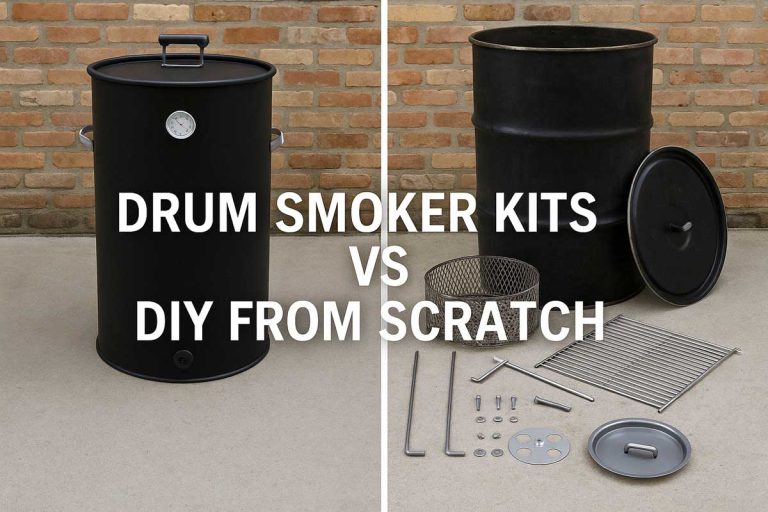
If you’re serious about backyard barbecue, chances are you’ve looked into building your own drum smoker. These upright barrels are legendary for holding heat, producing rich smoke, and cooking meat to perfection. But should you buy a kit or go fully DIY from scratch?
This guide breaks it all down. Whether you want a quick weekend build or enjoy the challenge of crafting every piece by hand, we’ll help you decide the best path for your next smoker.
What is a Drum Smoker?
A drum smoker is typically built from a 55-gallon steel barrel. It stands upright and uses vertical heat flow to cook food low and slow. These smokers are known for their efficiency and simplicity.
The heat source sits at the bottom. A grate for meat goes at the top. Some setups add a second grate, a diffuser plate, or a water pan to control temps and moisture.
Drum smokers work with charcoal, lump or briquette, and allow you to add wood chunks for smoke flavor. With minimal parts and tight airflow control, they’re easy to manage once you learn the setup.
What is a Drum Smoker Kit?
A drum smoker kit includes all the essential parts you need to turn a clean steel barrel into a working smoker. Most kits come with:
- Air intake vents
- Exhaust stack or vent
- Grate supports
- Cooking grates
- Lid handle
- Temperature gauge
- Hardware for assembly
Some premium kits include extras like ash baskets, charcoal grates, diffuser plates, or hinged lids.
All you have to do is provide the barrel and basic tools to drill and install the parts.
What is a DIY Drum Smoker Build from Scratch?
Going full DIY means starting with just a barrel and sourcing or fabricating every part yourself. You decide the layout, drill holes, weld or bolt on vents, add your own grates, and make custom modifications based on your design.
Some builders repurpose old grills, plumbing supplies, or scrap metal to create their smoker. It takes more effort and time but offers total creative control.
Key Differences Between Kits and DIY from Scratch
Let’s compare both approaches across important factors to help you choose what’s better for your build.
| Feature | Drum Smoker Kits | DIY from Scratch |
| Skill Level Needed | Beginner to moderate | Moderate to advanced |
| Time to Build | 2 to 5 hours | 1 to 3 days or more |
| Tools Required | Basic (drill, wrench) | Drill, grinder, welder (optional), saw |
| Parts Included | All essentials in one box | You gather every piece |
| Customization | Limited to what the kit allows | Fully customizable |
| Cost | $150 to $300 plus barrel | Varies widely ($50 to $200 total) |
| Look and Finish | Clean and polished | Varies by skill and materials |
| Reliability | Professionally designed components | Depends on build quality |
Pros of Using a Drum Smoker Kit
Fast and Easy
You can go from an empty barrel to a working smoker in a single afternoon. The parts are designed to fit together, with clear instructions.
No Welding or Guesswork
Most kits are bolt-on. That means no welding, no precision cutting, and fewer chances of something going wrong.
Proven Design
Kits are usually tested and optimized. You get good airflow, proper spacing, and solid performance without trial and error.
Great for Beginners
First-time builders benefit from structured guidance. You don’t have to figure out every detail on your own.
Pros of DIY from Scratch
Fully Custom
Want two cooking racks? A side firebox? An offset stack? You decide every feature and measurement.
Budget Friendly
If you have parts lying around, your costs can be minimal. You can find barrels for free or cheap, reuse metal, or salvage old grates and vents.
Learn as You Build
A DIY build forces you to understand how airflow, heat, and smoke work. It’s a great learning experience and can make you a better pitmaster.
More Rewarding
There’s nothing like cooking your first brisket on a smoker you built from the ground up. The pride is real.
Common Problems with DIY Builds
If you go full DIY, expect to face challenges. Here are a few common ones:
- Uneven airflow
- Leaky lids
- Misaligned grates
- Warped metal from bad welds
- Trouble keeping temps steady
That doesn’t mean you can’t get it right. It just takes more trial and error.
Real-Life Builders Share Their Experience
Kit Build: Backyard Pitmaster in Nevada
Chris bought a drum smoker kit online and had it fully assembled in one day. He used it that weekend to smoke ribs and chicken. No issues. Temps held steady, and the results were delicious. He recommends kits for anyone new to DIY.
DIY Scratch Build: Welding Hobbyist in Georgia
Luis collected parts for a month and built a custom smoker from a food-grade barrel and scrap parts. He added side shelves, a paint job, and a raised charcoal basket. It took more time, but the result is a one-of-a-kind smoker he’s proud of.
Hybrid Approach: Custom Kit Mod
Some builders start with a basic kit and add custom upgrades like diffuser plates, side tables, or tool hooks. You get the reliability of a kit with the flair of a DIY project.
How to Choose the Right Path for You
Ask yourself these questions before starting your build:
Do You Have the Tools?
Kits require only basic hand tools. DIY from scratch often means cutting metal, grinding, and sometimes welding.
What’s Your Budget?
Kits may look more expensive up front, but they save you trips to the hardware store and buying parts separately. DIY builds can be cheaper if you already own the tools or materials.
Are You in a Hurry?
Kits are quick. If you want to be smoking this weekend, go with a kit. DIY builds take more planning and time.
Do You Want to Learn or Just Smoke Meat?
If your goal is to master BBQ and not spend days measuring and cutting, a kit is a smart choice. If you love projects and want to learn the mechanics behind it, go full DIY.
Where to Get a Good Drum Smoker Kit
There are some reliable brands offering quality smoker kits. Look for options that include stainless hardware, thick gauge steel, and clear instructions.
Popular sources include:
- Gateway Drum Smoker kits
- Pit Barrel Cooker kits
- DIY Drum Smoker kits from independent builders
- BBQ-specific hardware shops
Make sure your kit fits the barrel you plan to use. Some are made for open-top barrels only. Others work with closed-head barrels once you remove the lid.
What to Look for in a Good DIY Barrel
If you’re building from scratch or adding a kit, your barrel matters. Here’s what to look for:
- Food grade or new steel
- No toxic linings or paint inside
- No rust or chemical residue
- Straight walls with no big dents
- Removable lid or lid you can cut cleanly
You can find barrels from:
- Industrial surplus suppliers
- Food processing plants
- Facebook Marketplace
- Local farms or breweries
Always burn out and clean your barrel thoroughly before using it for cooking.
Add-Ons That Boost Performance
Whether you choose a kit or DIY, these upgrades improve how your smoker performs.
Diffuser Plate
Helps spread heat evenly and reduce hotspots.
Basket for Charcoal
Lifts your fuel off the floor for better airflow and easier cleanup.
Side Handles
Make moving the drum safer and easier.
Lid Hinge
No need to find a place to put the lid down. Hinges add convenience.
Gasket Tape
Adds an air-tight seal around the lid and vents.
Final Thoughts
Both drum smoker kits and DIY builds have their pros and cons. It comes down to what kind of builder you are.
If you want something fast, reliable, and beginner-friendly, a kit is the way to go. If you enjoy hands-on projects, have tools, and want something one-of-a-kind, try building your own smoker from scratch.
You’ll end up with a drum smoker that fits your cooking style, your space, and your personality—no matter which route you take.

