

I’ll never forget my first real attempt at smoking meat.
I had scored an old offset smoker on Craigslist for fifty bucks. It looked legit. Firebox on the side. Heavy lid. The works. But once I fired it up, I realized I was in over my head. My ribs cooked unevenly. The fire kept dying. The meat looked amazing but came out dry.
A year later, a buddy introduced me to something called a vertical drum smoker. It looked like a steel barrel with a lid and some air vents. Nothing fancy. But the results? Unbelievable. Juicy chicken. Tender ribs. Way less fuss.
That’s when I realized something simple: the smoker you use changes everything.
If you’re stuck choosing between a vertical drum and an offset smoker, this guide will help you figure out which one fits your style.
What Is a Vertical Drum Smoker?
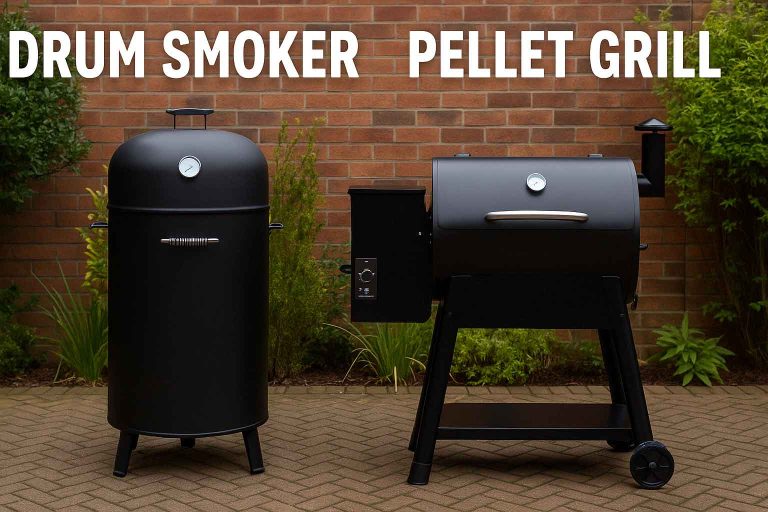
A vertical drum smoker, often called a UDS (Ugly Drum Smoker), is a DIY or store-bought smoker made from a 55-gallon steel drum. It uses a vertical cooking setup. The fire is at the bottom, and food sits on grates above it.
Heat and smoke rise straight up, surrounding the meat. This creates a consistent cooking environment that doesn’t need a lot of hands-on control.
Vertical drum smokers are growing in popularity. Backyard pitmasters love them for their simplicity, fuel efficiency, and flavor.
What Is an Offset Smoker?
Offset smokers are classic barbecue machines. You’ve seen them outside BBQ restaurants or in cooking competitions. They have two chambers—one for fire, one for food. Heat and smoke travel from the side firebox into the main cooking area.
This style gives you traditional, bold smoky flavor, especially if you burn hardwood instead of charcoal.
But they take more effort. Temperature management is harder. Airflow is trickier. You have to rotate your meat. And you’ll be feeding the fire more often.
Which Smoker Is Easier to Use?
Vertical drum smokers are much easier to manage. Once you dial in the vents, the smoker holds a steady temperature for hours. You don’t need to babysit the fire.
Offset smokers require practice. You’ll need to learn how to manage fuel, airflow, and temperature zones. Expect to make mistakes early on.
If you’re new to smoking, or just want to relax on the weekend while your ribs cook, the vertical drum is the better choice.
Which Smoker Produces Better Flavor?
Offset smokers win this one—especially when you’re burning real wood.
The smoke flavor from an offset smoker is deeper and richer. The long path the smoke travels adds complexity and character. That’s why competition pitmasters often choose offsets.
Vertical drum smokers still make flavorful meat, but the taste is cleaner and a bit lighter. You’ll get more of that juicy, tender finish and less bark-heavy crust.
It depends on your preference.
Want bold and smoky? Go offset.
Want tender and clean? Go drum.
Fuel Use and Efficiency
Vertical drum smokers are fuel misers. One full load of charcoal can last eight to twelve hours. Some drum users smoke overnight without adding more fuel.
Offset smokers burn through wood or charcoal much faster. You’ll need to check and feed the fire regularly.
If you’re looking to save on charcoal or wood, the drum wins.
Heat Control and Cooking Temps
Vertical drums hold heat like a champ. Their sealed barrel design and upward heat flow create an even cooking zone. Temps stay steady with very little effort.
Offsets are different. They have hot spots near the firebox and cooler zones further away. You’ll need to rotate food and adjust airflow to balance heat. That takes skill and attention.
For set-it-and-forget-it cooking, drums are the clear winner.
How Much Can You Cook?
Offset smokers usually offer more horizontal cooking space. They’re built for quantity. Perfect if you’re feeding a big crowd or running a pop-up.
Vertical drum smokers aren’t tiny, though. Many have multiple stacked racks inside, so you can still cook a lot—just in a different layout.
If you need massive space, go offset.
If you want to cook for family and friends, the drum is plenty.
Smoker Size and Portability
Offsets are bulky. Some take two people to move. They’re long, heavy, and often made from thick steel.
Drum smokers are more compact. Even fully assembled, most can be moved by one person. Great for patios, small yards, or even tailgating.
Maintenance and Cleaning
Vertical drums are simple machines. Fewer moving parts. Fewer hinges and handles. Ash falls into a clean-out tray or can. That’s it.
Offset smokers need more maintenance. The firebox builds up ash faster. The doors and hinges can rust if not oiled. You’ll need to clean more often.
Less time cleaning = more time enjoying barbecue. That’s a win for the drum.
How They Handle Bad Weather
Drum smokers handle wind and cold better than offsets. The vertical airflow and enclosed fire hold heat longer. You’ll burn less fuel even when the weather turns.
Offsets lose heat faster in wind or cold. Unless they’re made from super-thick steel, you’ll be burning extra fuel to keep temps up.
If you live in a place with cold winters or windy backyards, the drum is more reliable year-round.
Cost to Buy or Build
Vertical drums are affordable. You can build one yourself for around $150 to $200. Or buy one pre-made starting at $300.
Offset smokers come in a wide price range. Cheap ones under $300 tend to leak smoke and struggle with heat control. Good ones start around $800 and go into the thousands.
If you’re watching your budget, the drum gives you more bang for your buck.
Full Comparison Breakdown
Let’s take a closer look at how they stack up:
Ease of Use
Vertical drums are beginner-friendly and require little supervision.
Offsets demand attention, practice, and patience.
Flavor
Offsets deliver strong, smoky bark and depth.
Drums give cleaner, more balanced smoke flavor.
Fuel Efficiency
Drums use less charcoal or wood.
Offsets need regular refueling.
Temperature Control
Drums hold temps steady.
Offsets fluctuate and require tuning.
Cooking Capacity
Offsets have more horizontal space.
Drums stack racks vertically to fit more than you’d expect.
Build Cost
Drums are cheaper to build or buy.
Offsets can get expensive fast.
Maintenance
Drums are easier to clean and maintain.
Offsets need more upkeep.
Portability
Drums are lighter and easier to move.
Offsets are bulky and harder to transport.
Weather Performance
Drums handle wind and cold better.
Offsets struggle in tough conditions.
Best Fit For
Drum smokers are great for beginners, casual weekend cooks, and small families.
Offset smokers are perfect for flavor chasers, competition cooks, and big events.
What Backyard Pitmasters Say
I talked to three friends who’ve cooked with both.
Tina in Texas: “Offset all the way. I like managing the fire. It’s part of the experience.”
Dan in Oklahoma: “Give me a drum any day. I’ve got a family. I don’t have time to babysit a smoker.”
Mike in California: “For brisket, I go offset. But for ribs and chicken? Drum. I use both depending on the day.”
So, Which Smoker Is Better for You?
If you’re new to smoking or want easier weekend cooks, start with a vertical drum smoker. You’ll get solid results with less stress.
If you’re chasing bold smoke flavor and don’t mind hands-on work, an offset smoker could be your long-term love.
You really can’t go wrong. Both make great barbecue. One just fits your lifestyle better.
Final Thoughts
Start with the smoker that matches your time, budget, and patience. Then grow from there.
Barbecue isn’t about fancy tools. It’s about fire, patience, and love.
Whichever path you choose—offset or vertical drum—you’re about to enter a world of incredible food and unforgettable cookouts.

