

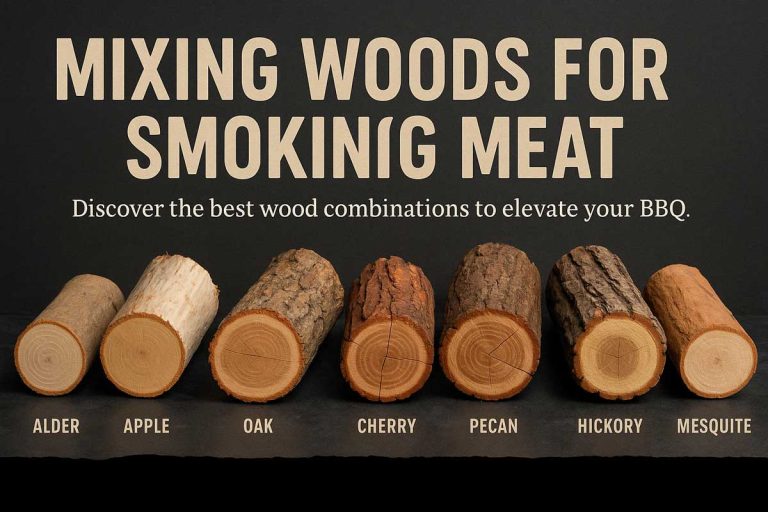
Smoking meat isn’t just about choosing the right cut or seasoning—it’s also about how you craft your smoke. Mixing different types of wood lets you layer flavors, balance intensity, and create your own unique barbecue signature. Whether you’re using a drum smoker, offset smoker, or pellet grill, blending woods is one of the best ways to personalize your cook.
This guide walks you through:
- Why and how to mix woods
- Popular wood pairings
- A mix-and-match chart
- Pro tips for better smoking results
Why Mix Smoking Woods?
- Flavor Balance
Some woods are very strong (like mesquite) and can overwhelm meat on their own. Mixing them with milder, sweeter woods (like apple or cherry) softens the smoke and brings out complexity.
- Custom Profiles
Just like spices, wood adds depth. Want a smoky, sweet, and fruity finish? Blend hickory, maple, and cherry. Craving bold and earthy? Try oak with pecan and a touch of mesquite.
- Experimentation
Mixing woods lets you experiment with what works best for your specific taste, meat type, and even cooking duration.
Best Practices for Mixing Smoking Woods
- Start with a 70/30 blend
Use 70% base wood (like oak or hickory) and 30% accent wood (like apple, cherry, or mesquite). - Match strength to meat
Light woods (e.g., alder, apple) work for fish and poultry. Stronger woods (e.g., mesquite, oak) hold up to brisket and ribs. - Stick with hardwoods
Never use softwoods (pine, spruce, cedar); they produce harmful and bitter smoke. - Go dry, not green
Use properly seasoned wood. Green wood creates bitter smoke and inconsistent burns.
Popular Wood Combinations
-
Hickory + Apple
- Why it works: Hickory brings robust, smoky flavor. Apple adds sweetness and a touch of fruit.
- Best for: Pork shoulders, ribs, chicken.
-
Oak + Cherry
- Why it works: Oak gives a steady burn and mild smoke. Cherry delivers sweetness and beautiful color.
- Best for: Brisket, turkey, pork loin.
-
Pecan + Maple
- Why it works: Both are nutty and sweet. Maple balances pecan’s richness.
- Best for: Pork chops, ham, whole chicken.
-
Mesquite + Oak
- Why it works: Mesquite is strong, earthy, and intense. Oak tones it down for longer cooks.
- Best for: Brisket, game meats.
-
Alder + Apple
- Why it works: Mild and slightly sweet combo perfect for delicate meats.
- Best for: Salmon, trout, chicken thighs.
Mixing Woods by Meat Type
| Meat | Wood Blend | Flavor Notes |
| Brisket | Oak + Mesquite | Bold, earthy, intense |
| Pork Ribs | Hickory + Apple | Smoky with a hint of sweetness |
| Chicken | Cherry + Pecan | Sweet, nutty, and mild |
| Turkey | Oak + Cherry | Mild smoke with beautiful red color |
| Salmon | Alder + Apple | Light and fruity |
| Lamb | Hickory + Maple | Rich smoke with caramel sweetness |
| Sausage | Oak + Cherry | Balanced and smooth |
| Duck | Pecan + Apple | Nutty with fruity finish |
| Venison | Mesquite + Oak | Deep flavor for wild game |
How to Mix Woods in Different Smokers
Drum Smoker
- Use lump charcoal as the heat source.
- Place wood chunks near or on coals.
- Mix woods in chunks (not chips) for sustained burn.
Offset Smoker
- Use wood splits or logs.
- Layer base wood first, then accent woods mid-cook.
- Great control over smoke level.
Pellet Grill
- Use pellet blends (pre-mixed or DIY).
- Vacuum-seal your own mix for consistency.
Electric or Gas Smoker
- Soak wood chips (optional).
- Use foil packs or smoker boxes with mixed chips.
Flavor Wheel: Wood Characteristics at a Glance
| Wood | Flavor Strength | Notes |
| Hickory | Strong | Bacon-like, robust |
| Oak | Medium | Earthy, smooth |
| Mesquite | Very Strong | Bold, earthy, slightly bitter |
| Apple | Mild | Fruity, sweet |
| Cherry | Mild | Sweet, colorful |
| Pecan | Medium | Nutty, rich |
| Maple | Mild | Caramel-like sweetness |
| Alder | Very Mild | Delicate, slightly sweet |
| Peach | Mild | Light fruit flavor |
| Grapevine | Strong | Fruity, tart |
Pro Tips for Blending Wood Flavors
- Test Small Batches: Try new mixes on smaller cuts (like thighs or chops) before a big brisket.
- Write It Down: Keep a smoke log noting what you blended, how long you smoked, and flavor outcomes.
- Complement Seasonings: Match your wood blend to rubs or sauces. Sweet rub? Use maple or apple. Spicy rub? Go for oak or hickory.
Final Thoughts
Mixing woods is where science meets art in BBQ. There’s no “one-size-fits-all,” but by understanding each wood’s personality and how they play together, you can craft the perfect smoky masterpiece.
As you get more confident, start building your signature blend. The one that makes people say, “What did you use to smoke this?”

