

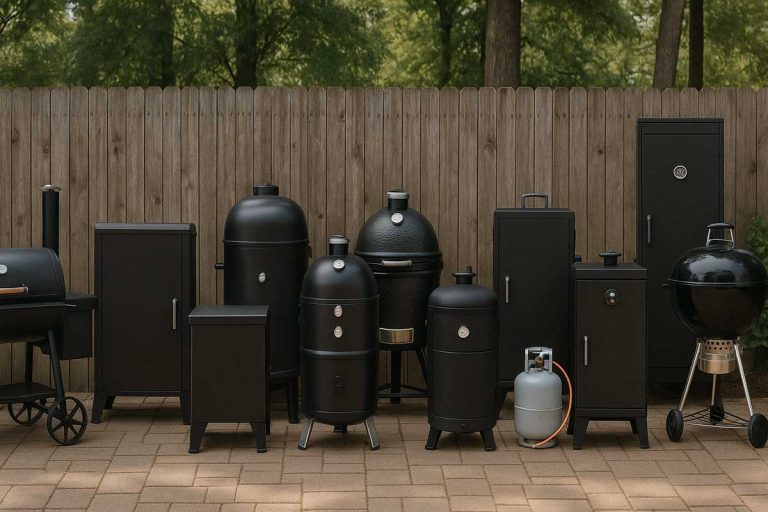
When you’re serious about barbecue, choosing the right smoker makes all the difference. Some are great for beginners. Others are built for pitmasters chasing the perfect bark. Whether you want set-it-and-forget-it convenience or a full hands-on smoke session, there’s a smoker that fits your style.
In this guide, we’ll explore the most popular types of smokers, how they work, and why each one matters. From the backyard to the competition circuit, understanding your smoker is the first step toward mastering your barbecue.
Offset Smoker
The offset smoker is a classic. You’ve seen these with the firebox mounted to the side and a large main chamber where the meat cooks low and slow.
This design allows smoke and heat to flow naturally through the cooking chamber. It’s the smoker of choice for traditionalists and pros who love managing firewood and airflow.
Best for: Experienced pitmasters who want full control.
What to expect: Authentic smoke flavor, even cooking, and long cook times.
Drum Smoker (Ugly Drum Smoker or UDS)
The drum smoker looks like a steel barrel—and that’s because it is. These vertical smokers are simple, budget-friendly, and extremely efficient.
Popular among DIYers, a UDS holds temperature like a champ and uses very little fuel. It’s great for beginners but still respected by the pros.
Best for: Backyard pitmasters and DIY enthusiasts.
What to expect: Easy setup, consistent temps, and bold flavor with minimal fuss.
Pellet Smoker
Pellet smokers use compressed wood pellets for fuel. You fill the hopper, set your temperature, and the machine does the rest. A built-in auger feeds the fire as needed.
Think of it as the smoker with cruise control. It’s perfect for those who want wood-fired flavor without babysitting a fire all day.
Best for: Busy cooks or people new to smoking meat.
What to expect: Mild wood flavor, precise temps, and nearly hands-free cooking.
Electric Smoker
An electric smoker plugs into a wall and controls heat with a thermostat. Add wood chips for smoke, and you’re good to go.
This is one of the easiest smokers to use, making it a solid pick for apartment dwellers or anyone who wants a low-maintenance setup.
Best for: Set-it-and-forget-it cooking with no fire management.
What to expect: Clean flavor, reliable results, and minimal learning curve.
Charcoal Smoker
The charcoal smoker is a go-to for those chasing classic smoky flavor. It takes more effort than electric or pellet smokers but delivers deeper taste and more bark.
You’ll need to manage vents and learn how to maintain steady heat. It’s more work—but for many, that’s the fun of it.
Best for: Traditionalists who want authentic results.
What to expect: Deep smoke flavor, hands-on fire control, and that true barbecue feel.
Kamado Grill
The kamado grill is a thick ceramic cooker shaped like an egg. The most famous is the Big Green Egg, but there are others.
Its heavy ceramic walls lock in heat and moisture, making it versatile enough for both smoking and grilling.
Best for: Home cooks who want a premium, all-in-one smoker and grill.
What to expect: Excellent heat retention, long burns, and juicy results.
Vertical Water Smoker
This vertical unit has multiple racks and a pan of water between the fire and food. That water helps stabilize temperature and adds moisture to the cook.
Often called bullet smokers, these are great for small backyards and tight budgets.
Best for: Weekend cooks who want a balance of ease and flavor.
What to expect: Steady temperature, moist meat, and a gentle learning curve.
Cabinet Smoker (Box Smoker)
A cabinet smoker, also known as a box smoker, has a square, upright design with front-access doors. You’ll see these used in competitions and restaurants.
They often run on charcoal, wood, or even electric. With tight seals and multiple racks, they’re designed for consistent results.
Best for: Serious barbecue fans and small-scale commercial cooks.
What to expect: Large capacity, great insulation, and steady performance.
Propane or Gas Smoker
A propane smoker uses gas for heat and wood chips for smoke. It’s similar to an electric smoker in ease of use but with a slightly different flavor profile.
These are plug-and-play but offer a more traditional smoke flavor than electric.
Best for: Beginners or casual cooks who want quick setup.
What to expect: Fast ignition, easy temp control, and a cleaner burn.
Kettle Grill (Used as Smoker)
Your everyday Weber kettle can be turned into a solid smoker with the right setup. Just build a two-zone fire, add wood chunks, and use the vents.
It’s not a dedicated smoker, but it works well for small batches and experimenting.
Best for: Grillers who want to try smoking without buying a new rig.
What to expect: Limited space but great versatility.
Reverse Flow Smoker
A reverse flow smoker is a smarter version of the traditional offset smoker. It uses a baffle system to force heat and smoke under the cooking chamber before rising up and over the meat.
This setup evens out hot spots and gives more consistent results.
Best for: Serious smokers who want precision and balance.
What to expect: Uniform heat, improved airflow, and superior control.
Gravity-Fed Smoker
In a gravity-fed smoker, charcoal is loaded into a vertical chute and slowly burns from the bottom. Airflow and temperature are controlled by valves or digital systems.
These are common in competitions thanks to their long burn times and minimal babysitting.
Best for: High-volume cooks or competitors.
What to expect: Long, stable burns and low fuel use.
Stick Burner
A stick burner is a traditional offset smoker that uses split logs only—no charcoal, no pellets. You manage the fire entirely by hand.
This is barbecue in its rawest form. It takes effort, but the flavor is unmatched.
Best for: Purists who love working a fire.
What to expect: Unfiltered smoke, more control, and a steeper learning curve.
Choosing the Right Smoker for You
Think about your lifestyle, how much time you want to invest, and how involved you want to be in the cooking process.
- Want the full hands-on fire-building experience? Go with a stick burner or offset smoker.
- Prefer easy results with real wood flavor? Try a pellet smoker or vertical water smoker.
- Need set-it-and-forget-it convenience? Electric and propane smokers are your friends.
If you’re working with limited space, a kettle grill or UDS might be the perfect compromise.
Final Thoughts
The world of smokers is wide. Each type brings something different to the table.
Whether you’re new to barbecue or chasing perfection in every bite, picking the right smoker is the first step toward better flavor and deeper satisfaction.
Try one. Master it. And enjoy the smoke.

